 Materium
Material comparisons
Leather vs faux leather: understanding material descriptions
Explore leather-like surfaces with visual analysis, component descriptions and product care information.
Read as Markdown ↗Leather and faux leather can share similar textures. Compare the surface, backing and product description to understand the construction of the item you are exploring.
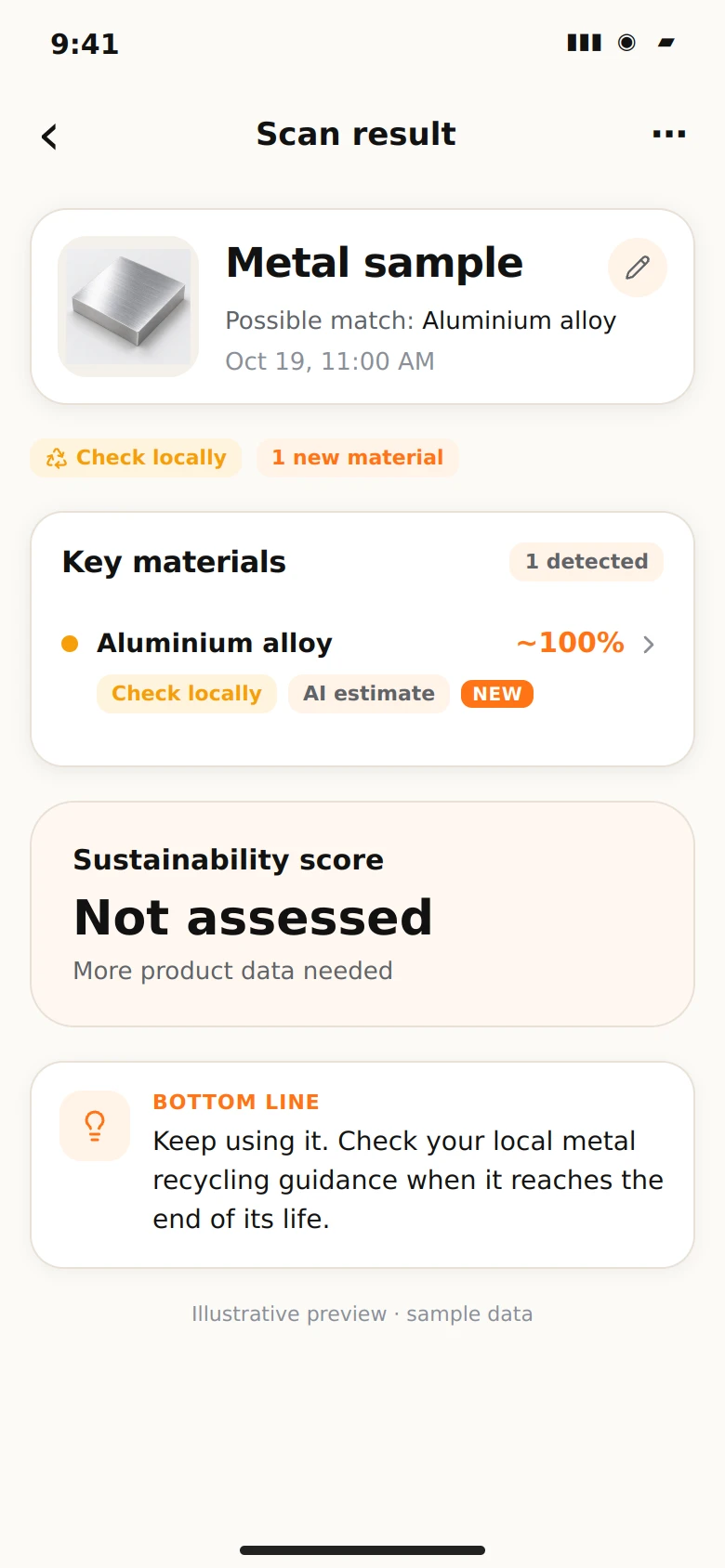
Observe the surface in context
Finish, texture and wear are useful features to photograph. Include a wider view of the object and a readable label where available. A material assessment becomes easier to interpret when it is tied to a particular component.
Materium analyses visible patterns and construction cues to suggest likely materials. The manufacturer’s description can add product-specific detail about the outer layer and backing.
Read the description by layer
Look for separate information about the outer material, lining, backing and coating. Keep the stated wording with the model or product reference.
The FTC leather guides discuss composition descriptions for certain leather and imitation-leather products in the US. They offer background for reading those descriptions carefully. If a listing leaves a component unclear, ask the seller for its material specification.
Make the comparison useful
Save a clear scan and keep the product description and care instructions in your research notes. Use the item’s recommended care routine to maintain its particular finish.
The terms leather and faux leather introduce material categories. Construction, intended use and supporting product information make the comparison more specific. For exact composition or authentication, follow up with the maker or an appropriate specialist.
Explore how Materium analyses patterns and material context, including the role of different information layers in a material investigation.
Sources and further reading
Sources checked 2026-10-19. Regional guidance is identified by location, with industry and supplier references labelled.
Published by Materium with AI assistance. Read our source and editorial approach.