 Materium
Material library
Build a personal material library with Materium
Organise saved scans into a useful material collection with clear photos, product context and research notes.
Read as Markdown ↗A personal material library turns individual scans into a collection you can revisit. Keep the object context, material assessment and supporting references together so each discovery stays useful.
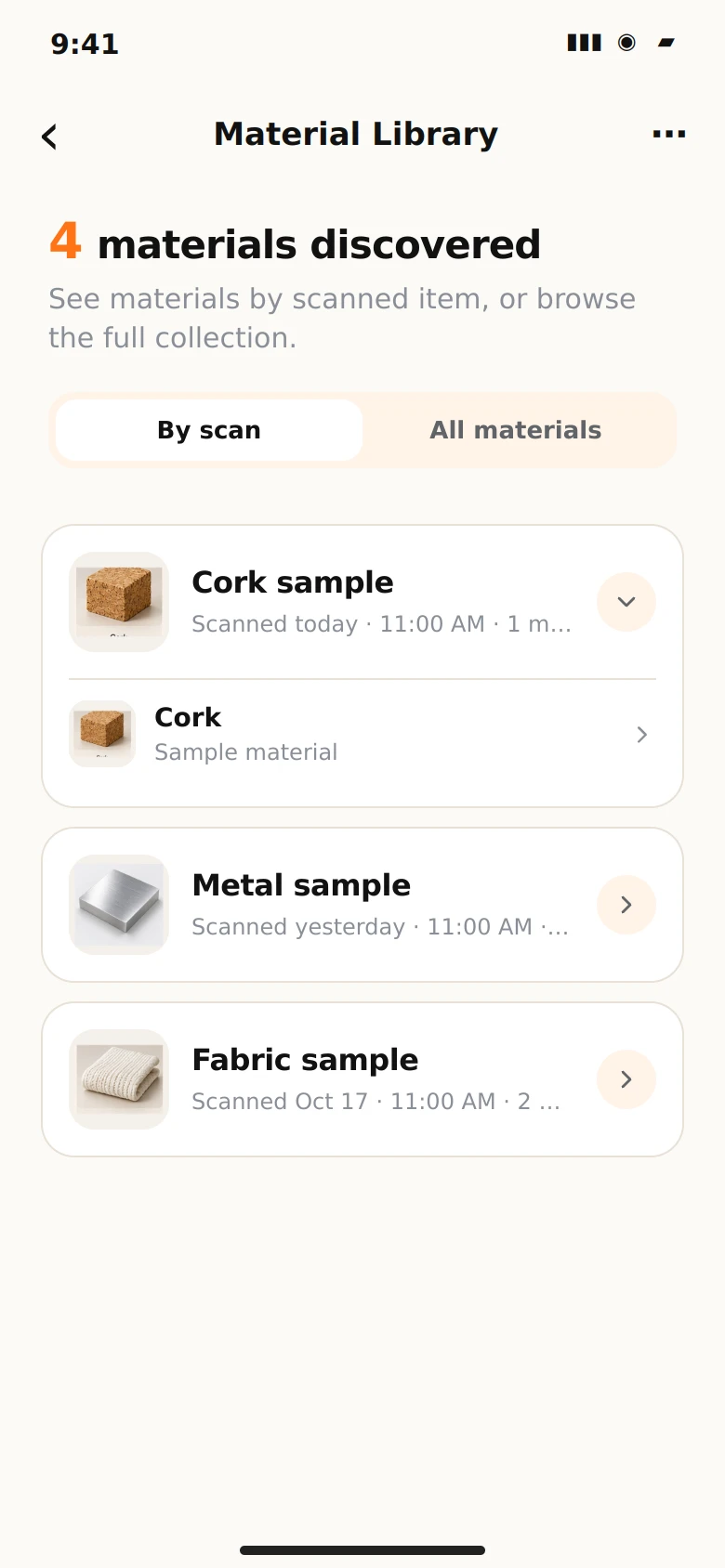
Choose a theme for your collection
Start with fabrics, everyday packaging or surfaces from a design project. A focused theme gives you a reason to compare entries and return to the material information.
Materium’s library connects recognised materials with consistent catalogue names and specimen images. Related names can share a material identity, helping your collection remain organised as it grows.
Keep a simple record alongside each scan
Save a clear image and note which component you explored. In your own research notes, add the date, a readable material marking or label, and a product reference where available.
A useful entry separates the visible observation, the app’s assessment and the information the maker provides. Supplementary notes can live wherever you prefer; this workflow does not depend on a particular export or citation-management feature.
Return to the collection with new questions
Use your library to compare textures, revisit product descriptions or plan a small material study. Add supporting details as you find them, keeping enough context to understand each entry later.
For care, recycling or product selection, refer back to current instructions for the item and location. A well-organised material collection helps you make those follow-up steps more informed and easier to repeat.
Explore how Materium analyses patterns and material context, including the role of different information layers in a material investigation.
Sources and further reading
Sources checked 2026-10-19. Regional guidance is identified by location, with industry and supplier references labelled.
Published by Materium with AI assistance. Read our source and editorial approach.