 Materium
Material identification
How to take better photos for material identification
Improve your material photos with clear framing, even light and useful views of patterns and construction.
Read as Markdown ↗A clear photo gives an AI material scanner better visual information to work with. Use even light, sharp focus and one intended surface in the frame, then add context with a whole-object view.
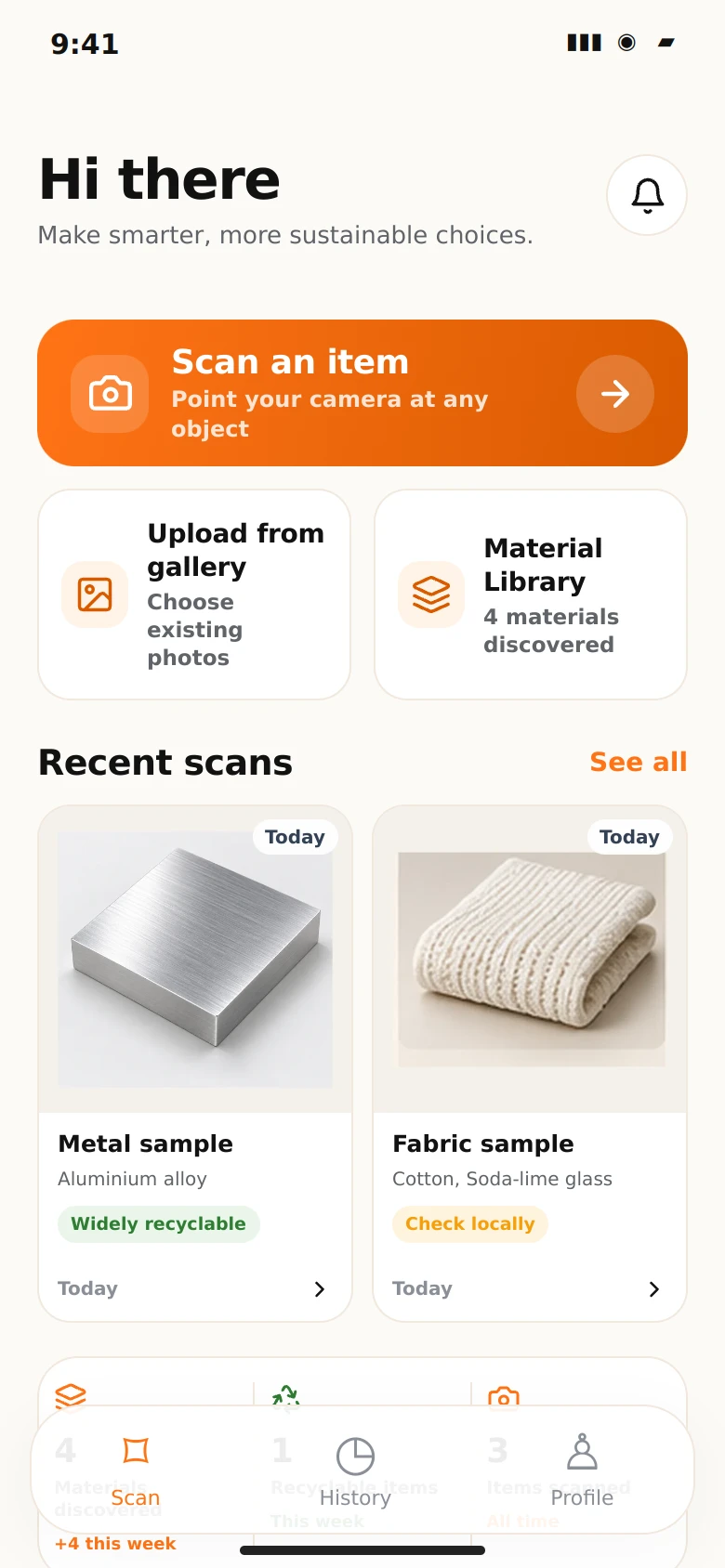
Capture context, pattern and construction
Start with the whole object and follow with a focused surface image. If a label or material marking is available, photograph it separately. Each view adds a different piece to your material reference.
For an object with fabric, plastic and metal components, explore one component at a time. This makes it easier to connect the resulting assessment with the part you wanted to study.
Give the surface room to show its detail
Use steady, diffuse light and adjust the angle to reduce glare. Check focus before submitting the image. A simple background helps the material’s texture and shape remain clear.
Keep the image close to what you see: strong filters and artificial blur can change its appearance. If a close-up is soft, move back slightly and retake it. A clear wider view often gives a more useful reference.
Read the report with the photo in mind
Materium uses visible patterns, finishes and construction cues alongside object context. Read those observations with the suggested material family, then add label or manufacturer information where you have it.
For AI material identification accuracy, the useful question is how well the result is supported by the available evidence. Better images improve that evidence; exact composition still benefits from product documentation. Save a representative scan and the details that help you interpret it.
Explore how Materium analyses patterns and material context, including the role of different information layers in a material investigation.
Sources and further reading
Sources checked 2026-10-19. Regional guidance is identified by location, with industry and supplier references labelled.
Published by Materium with AI assistance. Read our source and editorial approach.